Monday, August 31, 2015

Abime de Mas Raynal

Christine descending Mas Raynal
Super Direct in 2002
It occurred to me that I hadn't been to this wonderful cave since about 2003. 
I was very much looking forward to rigging it this time, rather than being pushed back behind 'some bloke' who always assumed that it was a man's job. 
Bollocks to that, I say. 
In 2002, on only my 3rd SRT trip, I went 'over the edge' and did the main hang or 'super direct' route which is 106 clean metres straight off a rusty iron bar in broad daylight on a single rope.
The only interruption is a re-belay some 30m from the crashing river below. The water heads North West to Source du Sorgues and is typically blue and cold.


Rick Van Dijk on his 2nd SRT trip...
The multi-pitch route is friendlier and has some snaggy, slimy green slopes on route to the final hang.
It is partially P-hung and partially requires spits and hangers - so it's advisable to take some hangers.
Ashley, my CDG trainee, wanted to do the main hang on 8mm. He rigged it but only ascended it and used our ropes on the way down.
The cave is like Alum Pot on speed. I think it is a little bigger in dimensions but the main hang is about the same.

Sunlight pours down the main shaft and the chilly gloom of the massive side inlet makes for some great silhouette photos. 


Rich at the bottom of Mas Raynal
I'm very proud of Rich who, from a climbing background, is not a fan of hanging over big holes on a single rope, never mind in daylight. He managed to de-rig most of it mostly without complaint.
Me rigging


The view from the bottom

Ash on his way up the main hang

Ash ascending

Rich and Rick on the multi pitch route while Ash ascends in the background

Sunday, August 30, 2015

Source du Sorgues....

Sorgues
With the weather ruining most of the local sites, we headed up to Aveyron to dive a cave which is usually in very good condition.


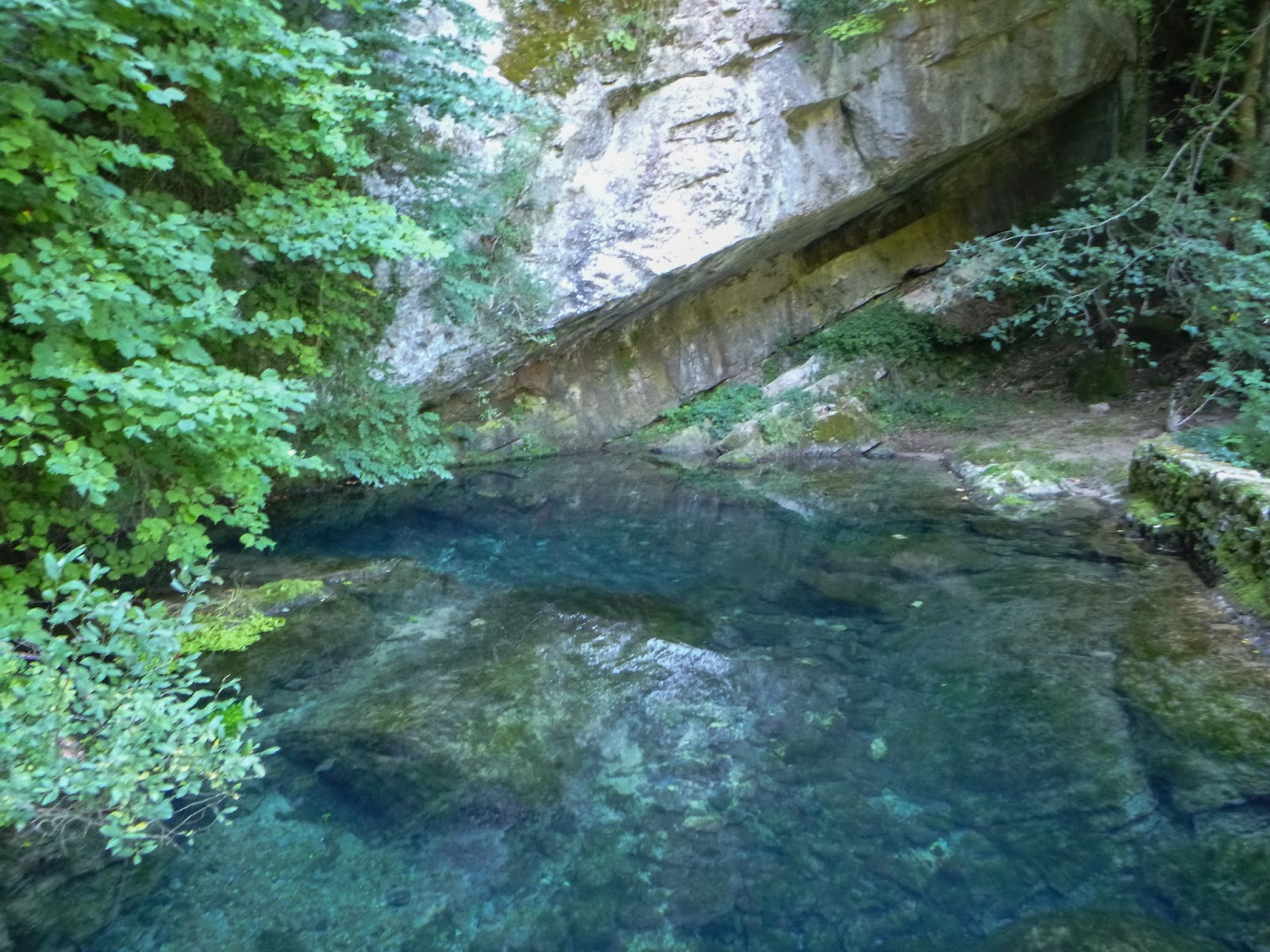
The Sorgues is the resurgence for the Mas Raynal cave some 4km away.
It usually has inviting, blue water and today was no exception.
Actually, it was a little milkier than normal...but Rick, Rich, Ash and myself had a pleasant dive nonetheless. Such a shame this cave is so short at only 200 or so metres long.
On our way home, we stuck our heads into the Rodel to inspect the water for a future dive. It looked pretty undamaged by the recent flooding and we kept it in our pocket for another day.
Butterfly at Sorgues


Another day, another dive... Christine in the Sorgues, by Richard Walker
Rick van Dijk in Rodel dry passages. It is necessary to carry diving gear through here to dive the stunning, sidemount sump.

Saturday, August 29, 2015

Not the Avencas...

The storm in Montpellier last Sunday not only killed several people, but really messed up the sumps in the region.

Montpellier Floods

We learned from Jean Tarrit, our good friend from CLPA and also the lady at the campsite that only 15mm was forecast.
In fact, about 1.6 metres fell and the result was a shock for this time of year and devastating for the people in Montpellier.
It was sobering to realise that the meteo office could get it so wrong - and had we arrived several days earlier, I have no doubt there would have been a fatality.

In the morning, we were greeted by GERSAM, a local caving club and also Jean Tarrit and we had lots of coffee and conversation. We cursed the weather, but also made plans for the times ahead. 
We were very pleased to meet Pierre from GERSAM who had been sorting out access with the local mayor and the group were excited to see the radio-location equipment.

Man go caving...fill can with cat litter...
We made an attempt today to go and visit Grotte Avencas, but as it was so close to the Bueges valley, I was not hopeful that it would be diveable.
Ashley got in first and declared it 'Fucked'. 
We took our gear back to the campsite and got in the swimming pool. We wondered if that was the closest we would get to diving....
Dutch neighbours...


Friday, August 28, 2015

The French Meteo...

Vallee de la Vis

Rich and I drove the last few hours to camping le Val d'Herault and the Dutch gang had already headed over to Coudouliere to check out the entrance and see if scooters would fit.


Vis Gorge
Rich and I drove down the stunning Vis gorge. We hung our heads out of the windows, trying to see if the river was looking the right colour. 
It did not look right to me.

We crossed the bridge at St Bauzille de Putois and there was definitely too much water of the wrong colour.

As we drove to the campsite, everything looked green and there had clearly been plenty of rain - but it had not been forecast.
We did a quick supermarket shop and headed over to Coudouliere to find the guys had brought all their gear to the entrance - but on looking at the sump, this trip was clearly not going ahead.

Meanwhile, Rich and I paid a quick visit to the source de Bueges and it was high and a vile colour. We were in no doubt that the Coudouliere exped was over for 2015.

Pedro pretty much sums it up...

At Coudouliere, we found Pedro Balordi blowing up the boulder choke to get the suex cowlings through. They figured this needed doing in any case for a return trip.

The gear made it's way back to the cars and we headed into the camp site to re-adjust, unpack the exped gear and touch base with the French cavers to make plans for the next few weeks.


Anton gets hold of Pedro's pink nail polish...what else is a boy to do?


Thursday, August 27, 2015

2015 - the Dutch Invasion!

Thursday 27th August 2015

We’re on the road again with the usual overladen van, to head down to the Herault for just under 3 weeks of caving and diving.
This year is a little different, in that we have been overtaken by the Dutch. Anton Van Rosmalen somehow managed to persuade me to give up a week of our trip to support him in his plans to dive a cave called Coudouliere.
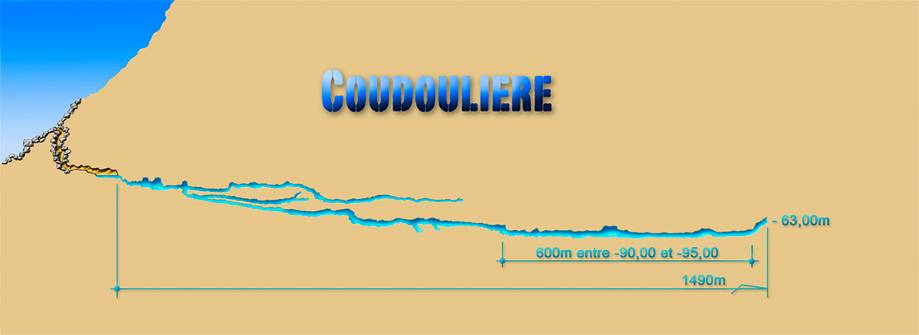
This cave (if you have been following us!) is next door to the Perdreau and hydrologically, they connect. Like most sumps in the Buéges valley, it also connects with the Source de Buéges so careful negotiations with the mayor of Pegairolles de Buéges and the local caving clubs mean that we are ‘go’ for plans to survey the sump.


It is reported as 1650 metres long and at least 600m of that is at 100m depth. In addition to this, the entrance to the cave is a 50m long, just off vertical boulder choke with some awkward squeezes. The biggest challenge is likely to be getting scooters and rebreathers into the cave in the first instance rather than the dive itself.

The ultimate goal is to radio-locate and survey the reported huge dry chamber at the end of the sump. A diver called Patrick Bolagno, from Marseille, passed the sump and discovered the chamber but there is no published survey of it beyond crude distance and depths. Further more, the radio-location attempt was not successful. This is not surprising as it is imperative to have a good survey to at least ensure you are in the right ball park.

Anton took upon himself a challenge to build a ‘lazy boy sump mapper’ which is based on the John Volanthen design, used for Pozo Azul.
With help from John and various intellectuals in electronics and engineering, Anton has built a device which is so far, producing reasonable results.
It is not known if the sump is lined with knotted or tagged survey line and without being able to make contact with Bolagno, we have to assume that distance will be difficult without re-lining the whole sump.
The hope is that the sump mapper will eliminate this obstacle.

Dr Graham Naylor introduces us to the Nicola 3
If this is successful, the next job will be sending in deep team 2 to set up a radio location beacon in the dry chamber. We owe Dr Graham Naylor (inventor of the Nicola phone, which has doubtless saved many lives already in it’s use in the Gouffre Berger and on many cave rescues) huge gratitude for his advice, patience and for building us a radio location system built around the prototype Nicola 3 radio.
We’ll also have the use of cave link, a communications system. This is less useful for radio-location but essential for communications with the underground team.

I’m a pessimist and the glass is always half empty. From experience, ambitious plans often only go half right. Anton is also aware that this is several weeks worth of work. We also plan to survey the shallow passages of the cave so there is an awful lot of work left to do in the cave.

The amount of work far exceeds the amount of time we have. The primary objective is to return with some data, get at least one team through the sump and have lots of fun using new technology and techniques new to some members of the team.
It is a great opportunity for many of the divers to put their skills to use, such as surveying, photography and videography and for the GUE divers, working with diving gear in dry cave.

I haven’t had the best preparation, badly injuring my ankle whilst at work. In the last 5 weeks I’ve been hopping about on crutches with a moon boot. My ankle is still swelling at random and although the pain has decreased, is still feeling unstable.
It is somewhat fortunate that my duties in the first week are limited to safety diver, medic, project manager and general bossy boots. Working for the NHS means I cannot afford a rebreather and to be honest, I’m not overly bothered about getting one. So my ankle will get another week to recover and my ‘big’ dive will be later in the trip where I’m super keen to get further into the Gourneyras.
The journey is the usual format. Ferry, drive until exhaustion, Formula One hotel, drive the last bit and arrive at Val d’Herault in a daze.


Wednesday, October 8, 2014

To the end of Garrel

The Garrel was first mentioned to us by Jean Tarrit back in 2011. He told us of a sump that was at the end of a cave that the CLPA had been exploring for over 30 years. It’s a big, complex cave system and continues to lead dry passageway even today. However, what lay beyond the sump was a mystery to them, and could be the start of another significant area of the cave so he was keen for us to dive it. In 2012, Christine and Tim dived and laid 40m of line, finishing as the visibility was deteriorating. The sump had gone to a depth of 10m, and was heading up towards the surface at a depth of 4.5m at the end, so there was a good chance it would surface. 

We returned this year with thoughts of surfacing into new cave passageway, and were very excited to going back. It doesn’t seem too bad a dive, to be honest. 90m of distance, and 10m depth. How hard could it be? Well, the cave diving is the easy bit. You see the sump is 6 hours caving from the entrance. It isn’t particularly difficult caving, lots of short vertical climbs and descents, and a particularly big and confusing boulder choke in the middle of the trip. All of this needs to be done of course with the diving gear. Jean brings friends with him. They are never the same people, for some reason, so I can only assume he has a large pool of friends to draw from. 

We set off early that morning, and no less than 8 cavers showed up to help us. Jean was so excited, that he left all of his equipment at home and had to go back to get it. He caught us up a couple of hours into the trip. These helpers were young, fit and keen. At the start anyway!

I’ve been trying to find the report of the last trip here, but I can’t. I suspect that, in the way that you forget pain, the interwebs has decided that the report is too painful to be told. It just means I’ll have to recant the story here for you. (Edit: It's here: A Grand Day Out Chris ;-)) 
We climbed into the cave down a sloping, low bedding plane just steep enough for you to not have to work very hard. This is great on the way in, but I’m always mindful of how I might extract myself from such places. I slid down to the bottom, thinking about levitation techniques. From there on, it’s a mixture of short rope pitches. We used SRT equipment this time. In 2012 we neglected to bring any because it was a “short, easy trip”. 


After about an hour, or so, the large passageway stops at the base of a huge boulder choke. There are multiple ways into it. We’d become spread out over the cave due to the vertical pitches, and I found myself with a young french guy who spoke about as much English as I spoke French. You can make what you will of that, but essentially, unless we wanted to ask each other our respective names for the next few hours, and discussing whether there is a monkey in the tree or not.  Anyway, I digress. My new friend decided that the way on was up and to the left. Well, it was his cave so I followed him. Climbed up a squeeze little hole, and then to a vertical rope pitch. There was nobody there, and I figured that if this was the way on, then we would have caught up the other team at this point. I tried to explain that we needed to go back to the bottom of the boulders and wait. OK, he said, I went down, and he went up. Le singe est sur l’arbre. I got found by another of the party and tried to explain. I think we made some progress, and we shouted at friend 1 to come back, which he duly did. This whole escapade took us a good 45 minutes, and we headed on through the boulder choke and caught up again. 

More big rooms, vertical climbs and descents, a very precarious totter across a knife-edge of rock like something from Lord of the Rings, 6 hours and a spot of lunch later, we arrived at the sump. This was a beautiful sight. It had a gorgeous green hue to it, and we could see the line heading off into the depths. That was until I fell in kitting up. Brown soup from all of the fine silt was now covering the entrance. I just hoped it wouldn’t drift into the main cave. We were planning to survey this sump, so visibility was needed in order to do a decent job.


After some precarious balancing while gearing up, Christine and I set off into the sump. Chris went first, patching the line and looking around for the way on. I followed behind making the survey. 


Pretty little cave, although I didn’t get to see too much of it, focussed as I was on my compass and wet-notes. The passage went roughly North West, and I surveyed the length of the line, and having a quick discussion with Chris at the end to the effect of “it’s all boulder choked from here on” and that was sadly the end of the dive. 20 mins in, 20 out and we were back at the pool again. We had the survey, but no new cave unfortunately. This was a great shame, but to put it in perspective, we don’t have to carry 2 sets of diving gear 6 hours into the cave again. Hopefully the survey will point to a way on on the dry side of the cave. That’s where the CLPA come into their own, and they will make good use of the data, I’m sure. 

The reverse trip back to daylight (ok, it was 9pm and dark when we got out) was hard going. Bags seem to get heavier, the cave gets smaller, and the climbs more exposed. I guess it’s just the effects of concentrating for 12-13 hours. The levitation on the final slope back to fresh air worked as well as you’d expect, and I slithered my way back up, just like the “worm” dance move. But only with 20inches of vertical space.

It was an exhausting trip and we all suffered for it for the next 24 hours. We got beer, as always, in the local bar. Fortunately they have an outside terrace as we definitely wouldn’t have been allowed indoors. Our trip formally closed the next evening when we invited all of the team around to the campsite for a BBQ. Spare ribs, sausages, salad, beer, wine, vegetables, lamb chops and moules too was a lovely finish to the week. 

Thanks to Jean Tarrit for taking the photos!

Trashed gear after Garrel


Saturday, September 27, 2014

Stunning Sorgues

Christine in the Sorgues, Aveyron. Photo: Richard Walker
The Event du Sorgues is one of my favourite resurgence flops in the area. The only problem is that it is too short!
It is about 220m long and ends in an impenetrable, vertical rift which is too tight to pass in any kit configuration.
This is desperately frustrating as it is the major resurgence for the mighty 'Mas Raynal', 4Km upstream.
It is, however, beautiful, with no access restrictions (despite having to practically drive through somebody's living room to get to a parking spot - don't take any vehicle bigger than a Berlingo!)
It is heavily managed with dams and weirs built in to presumably control the water which flows through the fish farm.
The water is cold, about 8 degrees and is almost always blue and clear.
I was intent on getting some photos here so we took the expensive camera kit, filled our cylinders, Rich gave me an impromptu lesson on his JJ CCR and just as my eyes began to glaze over, the bottles were ready and we went diving.


Chris in the Sorgues. Photo: Richard Walker

The Sorgues is geologically beautiful, with calcite ridges protruding from the floor and almost perfectly square passages with boulder strewn floors. Rippled sand catches the light as you swim mid passage, able to see your own shadow on the floor in the video lights.
The average depth is about 26m so you have just enough time to go to the 'end' and back within decompression limits. We were taking our time over photos and carrying a heavy tripod to mount the back-lights was a little tricky, so we didn't quite reach the end but we weren't far off when we turned for home.


Chris in the Sorgues, Aveyron. Photo Richard Walker


Chris in the Sorgues. Photo Richard Walker
Chris admiring the calcite 'ridge' in the Sorgues